Introduction
Planning a family holiday requires more than choosing attractions and booking accommodation. Parents need to consider luggage, children’s comfort, travel times, meal breaks, and how easily everyone can move between destinations. When visiting Osaka, Japan, choosing suitable transportation can make the entire trip more convenient.
Osaka is a popular destination for families interested in Japanese food, shopping, cultural attractions, entertainment, and day trips. Places such as Osaka Castle, Osaka Aquarium Kaiyukan, Universal Studios Japan, and the city’s lively shopping districts attract visitors throughout the year. Families may also want to explore nearby destinations such as Kyoto, Nara, or Kobe.
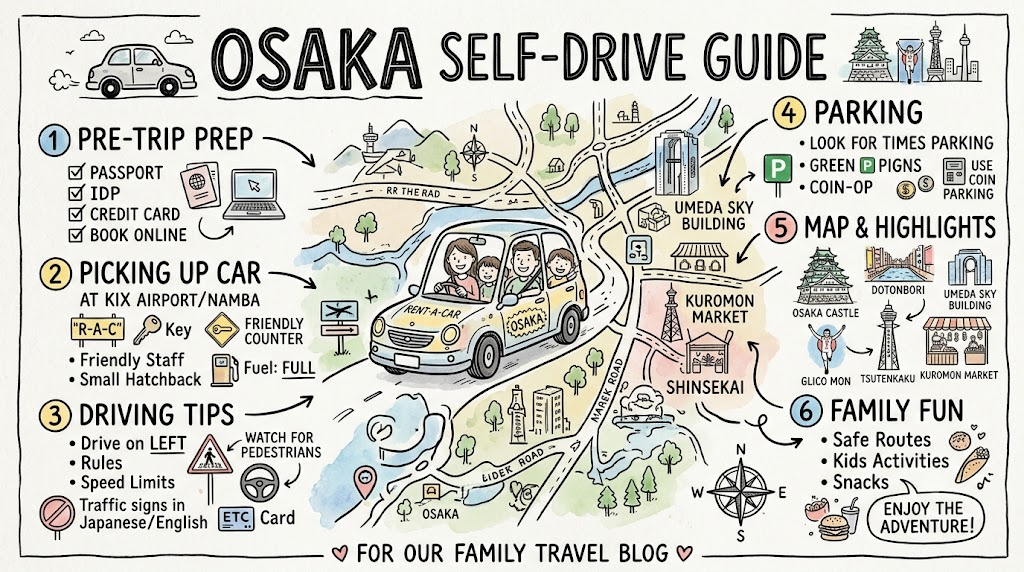
An Osaka self-drive rental can provide flexibility for families who prefer to plan their own schedules. A rental car may be particularly useful when traveling with young children, carrying several suitcases, or visiting places that require multiple transportation connections. However, public transport is also extensive in Osaka, so renting a car is not always the cheapest or fastest option.
This guide explains how families can choose a suitable rental car, understand rental costs, prepare the necessary documents, and drive responsibly in Japan. It also covers common booking mistakes and practical ways to compare rental cars with public transportation and taxis.
Although this guide focuses on Osaka, the same planning principles can help Indian families traveling from cities such as Delhi, Mumbai, Bengaluru, Pune, Hyderabad, Chennai, Kolkata, Jaipur, and Goa prepare for international road trips.
Why Choose a Self-Drive Rental for a Family Trip to Osaka?
A rental car can be helpful when a family itinerary includes several destinations, luggage, or travelers who need additional flexibility.
Convenient Travel With Children
Families traveling with young children may need frequent breaks, snacks, extra clothing, or changes to their schedule. A rental car can provide a private space for managing these needs between destinations.
Parents should check whether suitable child seats are available and confirm the applicable child-restraint requirements in Japan before booking.
More Space for Luggage
Traveling with children often means carrying strollers, suitcases, shopping bags, and other essentials. A vehicle with sufficient luggage capacity can reduce the difficulty of moving between hotels and attractions.
Always compare the actual luggage capacity rather than relying only on the number of passenger seats.
Flexibility for Day Trips
Osaka is a convenient base for exploring other parts of the Kansai region. Families may consider day trips to Kyoto, Nara, Kobe, or other nearby destinations.
A rental car can be useful when the itinerary includes multiple stops, although traffic, tolls, and parking fees should be included in the budget.
Comfort for Older Family Members
Older relatives may prefer fewer transfers and more direct journeys. A rental vehicle can make travel between selected destinations more comfortable, depending on mobility needs and the distance involved.
Privacy and Schedule Control
A self-drive rental lets eligible drivers manage their own departure times and routes. Families can stop for meals or rest when needed, subject to parking availability and the rental agreement.
However, driving in central Osaka can be less convenient than using trains because of congestion, one-way streets, and limited parking.
Who Should Consider an Osaka Self-Drive Rental?
Self-drive rentals can suit different types of family travelers, but the decision should depend on the itinerary.
Families With Young Children
Parents traveling with babies or toddlers may appreciate having space for child seats, strollers, and essential supplies. A rental car can be practical when several attractions are located outside the main urban area.
Large Families and Groups
A larger vehicle may help families traveling together avoid booking multiple taxis. Compare the total cost of one larger vehicle against public transportation or multiple smaller vehicles.
Families Planning Regional Road Trips
Visitors planning to explore destinations beyond central Osaka may benefit from a rental car. Before booking, check whether the vehicle can be driven outside the pickup area and whether any restrictions apply.
Indian Families Visiting Japan
Indian travelers should prepare their driving documents before departure. Japan has specific requirements for foreign drivers, and an Indian driving license alone is generally not sufficient for driving a rental car in Japan.
Confirm the applicable International Driving Permit requirements and document format with the relevant Japanese authorities before traveling.
Families Staying Outside Central Osaka
A rental car may be more useful for accommodation located outside convenient train or subway connections. Compare the cost of daily parking and driving with the time and expense of using public transport.
Benefits of Renting a Car for First-Time Family Travelers
For first-time visitors, a rental car can simplify some parts of a holiday, but good planning is essential.
Easier Luggage Management
Instead of carrying every suitcase through stations and transfers, families can store permitted luggage in the vehicle and unload it at their accommodation.
Do not leave passports, electronics, money, or other valuables visible inside a parked vehicle.
A Flexible Family Itinerary
Families can adjust their schedule when children become tired or weather conditions change. A car may also make it easier to combine attractions in different areas.
Before leaving, check opening hours, driving times, parking options, and whether advance reservations are required at major attractions.
Access to Selected Regional Destinations
Some destinations outside Osaka may be easier to reach by car, particularly when several stops are planned. Others are well connected by rail and may be easier without a vehicle.
Use route planning to determine whether driving offers a genuine advantage.
More Independence
Self-drive travel can reduce reliance on individual taxi bookings and fixed public transportation routes. It is particularly useful when a family wants to explore at its own pace.
First-time visitors should still consider whether they are comfortable driving on Japanese roads and following local traffic rules.
Types of Rental Cars Suitable for Families
The right vehicle depends on the number of passengers, luggage requirements, budget, and planned destinations.
Economy Cars
Economy cars can suit couples, small families, and travelers with limited luggage. They are often more economical to rent and fuel than larger vehicles.
However, some models may have limited rear-seat space or luggage capacity. Confirm that the vehicle fits your family comfortably.
Compact Cars
Compact cars offer a balance between size and practicality. They may be suitable for small families who want a manageable vehicle for city travel and occasional day trips.
Check the rear-seat space, child-seat compatibility, and boot capacity.
Sedans
Sedans can provide comfortable seating for families and may work well for airport transfers or longer journeys. Their luggage compartments vary, so confirm the amount of space available for suitcases.
SUVs
SUVs may be suitable for families carrying more luggage or traveling with several passengers. Some models provide higher seating positions and generous storage space.
Larger vehicles may cost more to rent, fuel, and park, and they can be less convenient on narrow streets.
Minivans
Minivans can be useful for larger families and groups traveling together. Depending on the model, they may offer additional seating, sliding doors, and flexible luggage arrangements.
Check the seating configuration carefully because luggage capacity may decrease when every passenger seat is occupied.
Hybrid and Electric Vehicles
Hybrid vehicles may help reduce fuel consumption, depending on the model and driving conditions. Electric rental cars may also be available through some providers.
If you choose an electric vehicle, plan charging stops and confirm charging access at your accommodation and destinations.
How to Choose the Right Car for Your Family
Before booking, consider the following practical factors.
Number of passengers: Choose a vehicle with enough approved seats for everyone. Never plan to carry more passengers than the vehicle permits.
Luggage capacity: Include suitcases, strollers, shopping bags, and any equipment your family needs.
Child-seat availability: Confirm the appropriate child restraints and installation arrangements in advance.
Fuel efficiency: Compare expected fuel costs if you plan to drive long distances.
Parking convenience: Check whether your accommodation offers parking and whether nearby attractions have suitable facilities.
Navigation: Ask whether the vehicle includes navigation in a language you can use. A phone-based navigation system may be another option, provided it is operated safely.
Driving comfort: Consider whether the driver is comfortable with Japanese road signs, local traffic, and driving on the left.
Rental conditions: Review insurance, mileage limits, fuel policy, cancellation terms, and permitted driving areas.
For a short city break focused on central Osaka, public transportation may be easier. For a regional family road trip, a suitable rental car may provide greater flexibility.
Documents Usually Required for a Self-Drive Rental in Japan
Requirements depend on the driver’s nationality, license, rental provider, and applicable Japanese law.
Valid Driving License
Drivers must hold the documents required by Japanese regulations for their particular circumstances. Visitors from countries such as India generally need a valid driving license together with an appropriate International Driving Permit issued under the applicable convention requirements.
Japan does not accept every IDP format. An IDP issued under the 1949 Geneva Convention is generally relevant for eligible foreign visitors, while permits issued under other conventions may not be accepted.
Confirm the rules with the relevant authorities before departure. Do not assume that a digital copy or an Indian license alone will be sufficient.
Passport and Identification
Foreign visitors should carry their passport and any other documents required by the rental provider. The provider may need to verify identity and eligibility before releasing the vehicle.
Address and Contact Details
Some providers request accommodation details, a local contact number, or other booking information. Check the requirements before arriving at the pickup location.
Payment Method and Security Deposit
A rental provider may require a credit card or another accepted payment method. Deposit conditions vary, so confirm the amount, refund process, and possible deductions.
Rental Agreement
Review the agreement before signing. It should explain the rental period, permitted drivers, insurance, fuel policy, toll arrangements, accident procedures, and return requirements.
Things to Check Before Collecting Your Rental Car
A careful inspection can prevent disputes and unexpected expenses.
Vehicle Condition
Inspect the exterior, windows, tires, lights, mirrors, and interior. Check for existing scratches, dents, and warning lights.
Take photographs of any damage and make sure the provider records it before departure.
Fuel or Charging Policy
Confirm whether the vehicle must be returned with a full fuel tank or at the same charge level specified in the agreement. Ask about refueling or charging fees if the requirements are not met.
Insurance Coverage
Review the insurance included in the rental. Understand the deductible, exclusions, accident procedures, and any additional protection options.
Do not assume that every type of damage or personal liability is automatically covered.
Mileage and Geographic Restrictions
Check whether unlimited mileage is included and whether the car can be driven outside Osaka or into other prefectures.
Child Seats and Safety Equipment
If you need child seats, request the appropriate equipment in advance and confirm that it will be available at pickup.
Rental Agreement Terms
Read the return policy, late fees, cancellation conditions, additional-driver rules, toll arrangements, and roadside-assistance instructions.
Keep the rental provider’s emergency contact details accessible throughout the trip.
Safety Tips for Driving in Osaka With Family
Safety should be a priority whenever you drive in an unfamiliar country.
Drive on the Left
Japan drives on the left side of the road, with the steering wheel generally on the right side of the vehicle. Drivers accustomed to driving on the right should take time to understand the differences before setting off.
Follow Traffic Rules
Obey speed limits, traffic signals, road signs, and parking regulations. Never use a handheld phone while driving.
Use Appropriate Child Restraints
Japanese law generally requires child restraints for children under six years old, subject to applicable legal provisions. Check the current rules and use an appropriate, correctly installed restraint.
Avoid Overspeeding
Adjust your speed to traffic, weather, and road conditions. Allow extra time rather than rushing between attractions.
Check Weather and Road Conditions
Rain, snow, and other conditions can affect driving safety, particularly on regional routes. Check the forecast before leaving and reconsider your plans if conditions become hazardous.
Keep Emergency Details Handy
Save the rental provider’s contact number and understand the procedure for breakdowns or accidents. In Japan, emergency services can be contacted through the appropriate emergency numbers.
Plan Parking Before Arrival
Check parking availability at hotels and attractions. Avoid stopping illegally or blocking pedestrian areas while searching for a space.
Understanding the Cost of an Osaka Self-Drive Rental
Rental prices vary according to the vehicle, dates, rental duration, pickup location, insurance, and demand. The following are illustrative budgeting ranges, not verified live quotations.
| Vehicle category | Illustrative daily rental range | Best suited for |
|---|---|---|
| Economy car | JPY 5,000–9,000 | Couples and small families |
| Compact car | JPY 6,000–12,000 | Small families and city travel |
| Sedan | JPY 8,000–15,000 | Families and longer journeys |
| SUV | JPY 10,000–22,000 | Families with additional luggage |
| Minivan | JPY 12,000–25,000+ | Larger families and groups |
Actual prices may be higher or lower depending on the provider and travel dates. Insurance, child seats, tolls, fuel, parking, additional drivers, and other charges may be billed separately.
Factors That Affect Rental Costs
Vehicle size: Larger vehicles generally cost more to rent and operate.
Rental duration: Multi-day packages may offer different daily rates from single-day rentals.
Pickup location: Airport collection, delivery, or one-way rentals may incur additional fees.
Insurance options: Coverage choices can change the total cost and the driver’s financial responsibility.
Seasonal demand: Holidays and popular travel periods may affect vehicle availability and pricing.
How Families Can Save Money
- Compare several providers and vehicle categories.
- Book early when travel dates are confirmed.
- Choose a vehicle that fits your family without unnecessary extra capacity.
- Check whether child seats and additional drivers cost extra.
- Compare parking, tolls, and fuel with public transportation.
- Review cancellation and change policies before paying.
- Confirm the complete price rather than relying on the advertised daily rate.
Common Mistakes First-Time Family Travelers Should Avoid
Families can prevent many rental problems by preparing in advance.
- Booking a car that is too small: Confirm luggage capacity with all passenger seats occupied.
- Ignoring driving-document requirements: Check the applicable Japanese rules before leaving India.
- Assuming insurance covers everything: Review exclusions and deductibles carefully.
- Forgetting child seats: Reserve suitable equipment before pickup.
- Underestimating parking costs: Check accommodation and attraction parking arrangements.
- Planning too many destinations: Allow time for traffic, meals, breaks, and parking.
- Ignoring toll charges: Include expressway tolls in your road-trip budget.
- Failing to inspect the vehicle: Photograph existing damage before driving away.
- Returning the car late: Understand the return deadline and overtime charges.
- Driving without route planning: Review navigation and road conditions before departure.
A little preparation can make a family road trip more comfortable and help prevent unnecessary expenses.
Rental Car vs. Public Transport vs. Taxi
Osaka has an extensive public transportation network, so families should compare the options before deciding.
| Factor | Rental car | Public transport | Taxi or ride-hailing |
|---|---|---|---|
| Cost | Can be useful for groups or regional trips; includes rental and operating costs | Often economical for city travel | Convenient but repeated journeys can be expensive |
| Convenience | Flexible once collected | Efficient on connected routes | Direct travel without driving |
| Flexibility | High, subject to rental terms | Depends on schedules and routes | Flexible for individual trips |
| Comfort | Private space for family and luggage | Varies with crowding and transfers | Private travel, depending on vehicle |
| Travel experience | Useful for independent road trips | Offers convenient access to urban attractions | Suitable for door-to-door journeys |
| Best use cases | Regional trips, groups, luggage-heavy travel | Central Osaka sightseeing | Short transfers and occasional trips |
For attractions in central Osaka, trains and subways may be faster and easier than driving. A rental car becomes more attractive when several people are traveling together, luggage is substantial, or the itinerary includes multiple regional stops.
Compare the total cost of the rental, fuel, tolls, and parking against public transport fares before deciding.
How MotoShare Japan Can Support Your Travel Planning
Travelers interested in vehicle-rental options can visit MotoShare Japan to review the information currently available on the platform and determine whether it supports their intended rental needs.
Before making a booking, verify the service area, available vehicle categories, rental dates, payment arrangements, and pickup conditions.
Review Available Vehicle Options
Choose a vehicle based on passenger numbers, luggage requirements, budget, and planned destinations. Compare the vehicle details and rental conditions before deciding.
Check Pricing and Rental Terms
Review the total price, deposit, insurance arrangements, mileage restrictions, fuel policy, cancellation conditions, and late-return charges.
Confirm whether airport pickup, delivery, or self-drive rentals are available for your specific location.
Verify Provider and Vehicle Information
Review the available provider details, vehicle information, pickup instructions, and contact arrangements. Confirm any eligibility requirements before making payment.
Choose a Suitable Rental Duration
A short rental may be suitable for a day trip, while a longer booking may be more appropriate for an extended family holiday.
Do not assume that all services offered by similarly named platforms in other countries are available in Japan. Confirm MotoShare Japan’s current services and conditions directly.
For travelers who also use vehicle-sharing services in India, the same practical principles apply: compare options, check the complete cost, verify eligibility, and read the agreement carefully.
Frequently Asked Questions
1. Can tourists rent a car in Osaka?
Yes, eligible tourists can rent a car if they meet Japan’s driving-document requirements and the rental provider’s conditions. Confirm the required documents before departure.
2. Do Indian tourists need an International Driving Permit in Japan?
Indian visitors generally need an appropriate International Driving Permit issued under the applicable convention requirements, along with their valid Indian driving license. Confirm the current rules with the relevant authorities before traveling.
3. How much does an Osaka self-drive rental cost?
Illustrative rates range from approximately JPY 5,000 per day for some economy vehicles to JPY 25,000 or more for larger minivans. Actual rates depend on dates, provider, vehicle, and included services.
4. Can I rent a car in Osaka without a credit card?
Payment requirements vary by provider. Some may accept alternative payment methods, while others require a credit card. Confirm accepted methods and deposit rules before booking.
5. Are child seats available with rental cars?
Some providers offer child seats as optional equipment. Request the appropriate seat in advance and confirm the price and installation arrangements.
6. Can I drive a rental car from Osaka to Kyoto or Nara?
Many rental agreements permit travel within the surrounding region, but restrictions vary. Confirm permitted travel areas and mileage conditions before leaving Osaka.
7. Is parking expensive in Osaka?
Parking costs vary by location, duration, and facility. Central areas and popular attractions may have higher charges, so check parking availability and fees when planning your itinerary.
8. What happens if the rental car breaks down?
Move to a safe location if possible, contact the rental provider, and follow its roadside-assistance instructions. Obtain approval before arranging repairs and keep records of any expenses.
9. Is insurance included in the rental price?
Rental coverage varies by provider and package. Check what is included, the deductible, exclusions, and any additional protection options before signing the agreement.
10. Can I rent a car for just one day?
Many providers offer daily rentals, but minimum rental periods and pickup arrangements vary. Confirm collection and return times and any late-return fees.
11. Is a rental car better than public transport for families?
It depends on your itinerary. Public transportation is often practical for central Osaka, while a rental car may suit families carrying substantial luggage or visiting several regional destinations.
12. Can I book a rental car through MotoShare Japan?
Visit MotoShare Japan to check the current services, vehicle availability, rental conditions, and booking process. Confirm that the platform supports your intended location and dates before making a payment.
Conclusion
An Osaka self-drive rental can help families enjoy greater flexibility, manage luggage more comfortably, and plan regional trips at their own pace. The right vehicle can make a difference when traveling with children, older relatives, or several suitcases.
Before booking, compare vehicle sizes and total costs, prepare the required driving documents, check insurance coverage, and understand Japanese road rules. Remember that public transportation may be the more convenient choice for sightseeing in central Osaka, while a rental car can be useful for carefully planned trips beyond the city.
The best transportation option is the one that fits your family’s itinerary, comfort requirements, and budget.
Planning a family trip to Japan? Visit MotoShare Japan to review the available vehicle-rental information and check whether a suitable option meets your travel needs. Confirm the booking conditions in advance and prepare for a smoother, more organized family journey.
