Introduction
Traveling through Japan is an exciting adventure, but one of the first decisions every traveler faces is how to get around. With options like bike rentals and car rentals, choosing the right mode of transport can significantly affect your experience. Japan’s cities are known for their efficient public transportation, but for first-time travelers, exploring local neighborhoods, countryside roads, or tourist hotspots often requires more flexibility.
In this guide, we compare bike rentals vs car rentals in Japan, covering cost, convenience, safety, and traveler suitability. Whether you are a solo backpacker in Tokyo, a couple exploring Kyoto, or a group visiting Hokkaido, this guide helps you make an informed choice.
Real-world use cases include:
- Exploring rural roads in Hokkaido or Shikoku
- Short trips between cities like Kyoto and Osaka
- Navigating crowded city streets in Tokyo and Osaka
- Weekend trips to coastal or mountain destinations
What buyers should evaluate:
- Cost of rental per day
- Fuel and parking considerations
- Safety and insurance options
- Flexibility for spontaneous trips
- Ease of navigating Japanese traffic laws
Best for: Travelers seeking flexibility, adventure, and hands-on exploration of Japanese culture.
Not ideal for: Those uncomfortable driving abroad, unfamiliar with traffic rules, or carrying heavy luggage.
Why Renting a Bike in Japan Is a Smart Choice
Renting a bike in Japan offers unique advantages:
- Cost-effective: Bikes are generally cheaper than cars, especially for solo travelers or short trips.
- Easy parking: Finding parking in Japanese cities is often easier on a bike than in a car.
- Traffic navigation: Bikes can maneuver through crowded streets faster than cars.
- Environmental benefit: Low fuel consumption and electric bike options make travel eco-friendly.
- Closer experience: Riding a bike allows for a more immersive experience of local life, food stalls, and scenic views.
Who Should Rent a Bike in Japan?
Bike rentals are ideal for:
- Solo travelers or couples seeking affordable transport.
- Tourists exploring cities or small towns without heavy luggage.
- Adventure enthusiasts wanting to access scenic rural or mountain areas.
- Students and working professionals planning short-term visits.
Benefits of Renting a Bike for First-Time Travelers
- Flexibility: Stop anywhere, anytime without worrying about parking fees.
- Affordability: Lower rental costs and fuel consumption compared to cars.
- Convenience: Avoid public transport schedules and crowded trains.
- Adventure: Experience Japan’s culture, street food, and scenic spots up close.
- Parking ease: Especially in cities like Tokyo, Osaka, and Kyoto, bike parking is widely available.
Types of Bikes You Can Rent in Japan
Scooters
- Compact, automatic transmission, ideal for city traffic
- Perfect for short-distance travel
Commuter Bikes
- Lightweight motorcycles designed for daily rides
- Suitable for urban and semi-urban routes
Sports Bikes
- High-speed performance bikes for enthusiasts
- Best on open roads or highways
Adventure Bikes
- Durable, long-distance touring bikes
- Ideal for rural areas and mountain trips
Cruiser Motorcycles
- Comfortable for scenic road trips
- Provides a classic riding experience
Electric Bikes
- Eco-friendly and low maintenance
- Perfect for city commutes and short trips
How to Choose the Right Bike for Your Trip
- Distance and terrain: Long trips? Choose an adventure or cruiser bike. City travel? Scooter or commuter bike suffices.
- Comfort: Check seating and suspension for long rides.
- Experience level: Beginners should opt for automatic scooters or commuter bikes.
- Fuel efficiency: Electric bikes or scooters are economical.
- Storage: If carrying luggage, choose bikes with storage compartments or add-ons.
Documents Usually Needed to Rent a Bike in Japan
- Valid Driving License: International Driving Permit (IDP) recommended for foreign travelers.
- Government ID Proof: Passport or national ID card.
- Address Proof (if applicable): Sometimes required for longer rentals.
- Security Deposit Requirements: May vary by rental shop; often refundable upon safe return.
Things to Check Before Renting a Bike
- Vehicle Condition: Ensure brakes, tires, and lights are functional.
- Fuel Policy: Understand pre-filled vs return-full policies.
- Insurance Coverage: Confirm coverage for accidents, theft, or damages.
- Mileage Limits: Check for daily/weekly restrictions.
- Helmet Availability: Mandatory in Japan; ensure rental provides helmets.
- Rental Agreement Terms: Read cancellation, late-return, and damage clauses.
Safety Tips for Riding a Rental Bike in Japan
- Follow Traffic Rules: Strictly adhere to speed limits and lane regulations.
- Wear a Helmet: Safety is mandatory and enforced by law.
- Avoid Overspeeding: Especially on highways and residential areas.
- Check Weather and Road Conditions: Heavy rain, snow, or icy roads can be dangerous.
- Keep Emergency Contacts Handy: For rental assistance and medical emergencies.
Cost of Bike Rental in Japan
Average daily rental prices:
| Bike Type | Price Range per Day (JPY) |
|---|---|
| Scooters | 2,500 – 3,500 |
| Commuter Bikes | 3,000 – 4,500 |
| Premium/Sports Bikes | 5,000 – 8,000 |
| Adventure Bikes | 6,000 – 10,000 |
Note: Prices may vary by city, season, and rental platform.
Common Mistakes First-Time Travelers Should Avoid
- Riding without checking local traffic rules.
- Ignoring weather or road conditions.
- Forgetting helmets or safety gear.
- Skipping insurance coverage verification.
- Overloading bikes with luggage.
- Failing to inspect bike condition before renting.
Bike Rental vs Public Transport vs Taxi
| Mode of Transport | Cost | Convenience | Flexibility | Comfort | Travel Experience | Best Use Cases |
|---|---|---|---|---|---|---|
| Bike Rental | Low-Medium | Moderate | High | Moderate | Immersive | Solo travelers, city tours, rural trips |
| Car Rental | Medium-High | High | High | High | Comfortable | Group trips, long-distance travel |
| Public Transport | Low | High | Low | Moderate | Standard | Urban travel, budget travelers |
| Taxi | High | High | Medium | High | Moderate | Short trips, convenience seekers |
How MotoShare Japan Can Help Travelers
MotoShare Japan offers a seamless bike rental experience:
- Easy Online Booking: Reserve bikes in advance through the platform.
- Wide Range of Vehicles: Scooters, commuter, sports, adventure, and electric bikes.
- Transparent Pricing: No hidden fees; clear daily and weekly rates.
- Verified Vehicle Owners: Trustworthy rentals with quality checks.
- Flexible Rental Options: Hourly, daily, or weekly plans.
- Availability Across Cities: Rent bikes in Tokyo, Osaka, Kyoto, and more.
FAQs
1- Can tourists rent a bike in Japan?
Yes, tourists can rent bikes in Japan using an international driving permit or Japanese license. Some rental shops may require additional ID proof.
2- Is an international driving permit required?
Yes, foreign travelers typically need an IDP along with their national driving license to rent and ride legally.
3- How much does bike rental cost in Japan?
Scooters start around 2,500 JPY/day, commuter bikes 3,000–4,500 JPY/day, and premium or adventure bikes 5,000–10,000 JPY/day.
4- Are helmets provided?
Most rentals include helmets, as it is mandatory by law to wear one while riding in Japan.
5- Can I rent a bike without a deposit?
Some rental services allow deposit-free rentals for verified users, but most require a refundable deposit for security.
6- What happens if the bike breaks down?
Contact the rental service immediately. MotoShare Japan provides roadside support and verified vehicle owners to resolve issues quickly.
7- Can I take the bike to another city?
Yes, most rentals allow intercity travel, but always check insurance and mileage limits beforehand.
8- Is renting a bike cheaper than a car in Japan?
For solo travelers or short distances, yes. Bikes are cheaper to rent, maintain, and fuel.
9- Are electric bikes worth renting in Japan?
Absolutely. They are eco-friendly, ideal for city commuting, and require less physical effort than standard bikes.
10- Do I need insurance for bike rentals?
Yes, insurance is recommended and often included in the rental fee to cover accidents, theft, or damages.
Conclusion
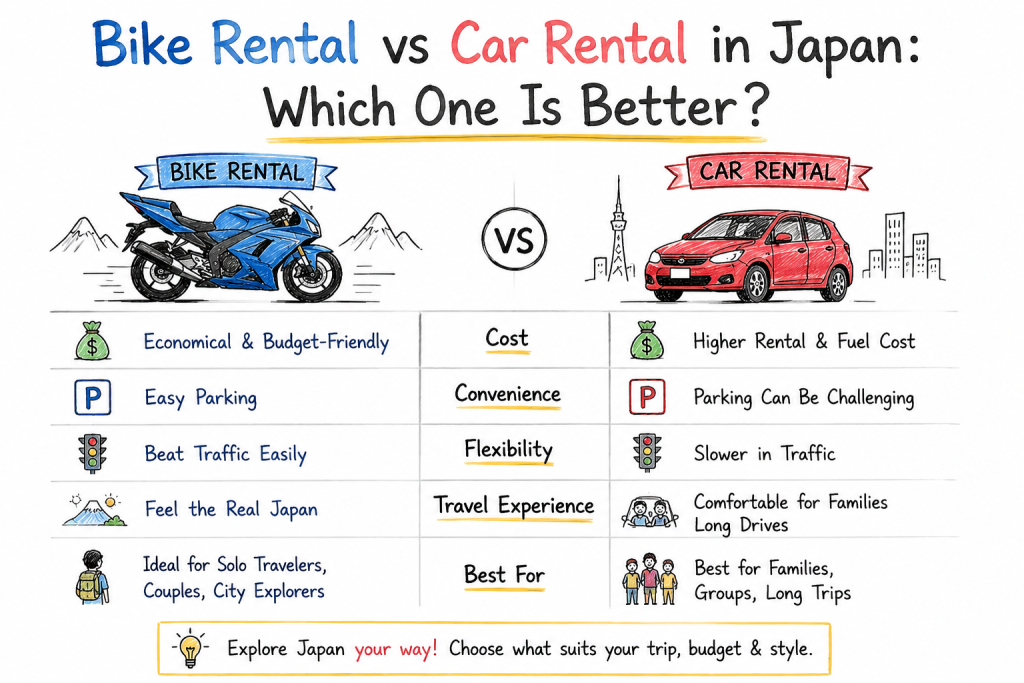
Choosing between bike rental and car rental in Japan depends on your travel style, group size, and destinations. For solo travelers or couples exploring cities and nearby scenic spots, bike rentals offer affordability, convenience, and an immersive experience. For groups, family trips, or long-distance travel with luggage, car rentals provide comfort and flexibility.
With MotoShare Japan, renting a bike is simple, secure, and flexible. From scooters to adventure motorcycles, travelers can explore Japan’s cities and countryside seamlessly. Plan your next journey and book your bike rental through MotoShare Japan today at motoshare.jp.
