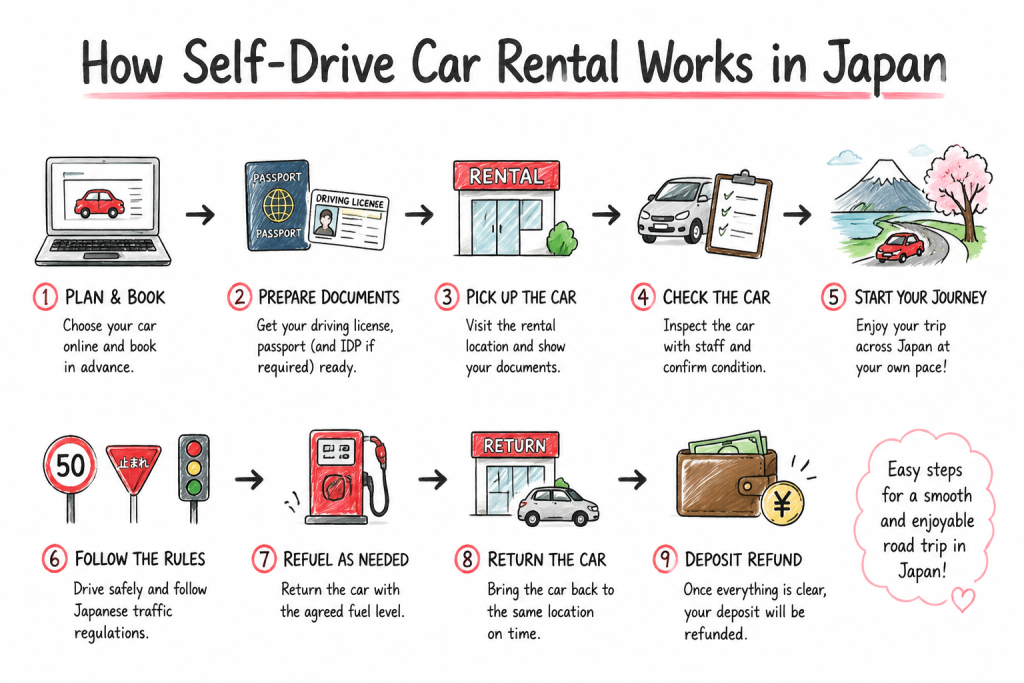
Traveling across Japan offers breathtaking scenery, cultural experiences, and hidden gems that public transport may not always reach. Self-drive car rental in Japan gives travelers the flexibility to explore cities and countryside at their own pace. From the bustling streets of Tokyo to the serene landscapes of Hokkaido, driving yourself opens opportunities that buses and trains cannot always provide. For Indian tourists, students, and professionals visiting Japan for the first time, understanding how self-drive car rental works is crucial to ensuring a smooth, stress-free trip.
Why Renting a Car in Japan Is a Smart Choice
- Flexibility: Explore remote towns, scenic spots, and less-touristy attractions not easily accessible by train or bus.
- Time-Saving: Avoid strict train schedules and enjoy direct routes between destinations.
- Comfort: Travel with luggage or family without worrying about crowded public transport.
- Convenience: Rental agencies are widespread in cities like Tokyo, Osaka, Kyoto, and Fukuoka.
- Cost-Effective for Groups: Splitting rental fees among travelers often makes car rental cheaper than buying multiple train tickets.
Who Should Rent a Car in Japan
Self-drive car rental is ideal for:
- Tourists exploring multiple cities and rural areas who want flexible itineraries.
- Backpackers and adventure travelers visiting regions like Hokkaido or Shikoku.
- Families and groups looking for comfort and convenience during sightseeing.
- Business travelers who need mobility between meetings in cities like Tokyo and Nagoya.
- First-time travelers who want to experience Japan beyond standard tourist spots.
Benefits of Renting a Car for First-Time Travelers
- Avoid the language barrier on public transport by navigating with GPS-enabled rental cars.
- Access off-the-beaten-path destinations such as Otaru Canal or Shirakawa-go.
- Experience authentic Japanese countryside and local eateries.
- Control your schedule and stop wherever and whenever you like.
- Enjoy a stress-free commute for long-distance travel without multiple train transfers.
Types of Cars You Can Rent in Japan
Economy and Compact Cars
Ideal for city driving and short trips. They are fuel-efficient and easy to park.
Mid-Size Sedans
Comfortable for families or groups, suitable for highways and longer trips.
SUVs
Perfect for mountainous or rural areas and scenic road trips.
Luxury Cars
Available for those seeking premium comfort and style for special occasions.
Electric Vehicles
Eco-friendly options are increasingly popular in cities like Tokyo and Osaka.
How to Choose the Right Car for Your Trip
- Trip Duration: Short city visits may only need compact cars; long intercity trips may require sedans or SUVs.
- Number of Passengers: Ensure enough seating and luggage space.
- Road Conditions: Rural areas may require higher clearance or all-wheel-drive vehicles.
- Fuel Efficiency: Longer trips benefit from cars with lower fuel consumption.
- Navigation Features: GPS with English support is highly recommended.
Documents Usually Needed to Rent a Car in Japan
- Valid Driving License: Japanese or International Driving Permit (IDP) recognized in Japan.
- Government ID Proof: Passport or national ID card.
- Credit Card: For payment and deposit purposes.
- Rental Agreement: Read carefully to understand rental duration, insurance, and mileage limits.
Things to Check Before Renting a Car
- Vehicle Condition: Inspect for scratches, dents, and mechanical issues.
- Fuel Policy: Confirm whether you need to return the car full or as-is.
- Insurance Coverage: Understand the extent of collision and liability coverage.
- Mileage Limits: Check if unlimited mileage is included or if additional charges apply.
- Rental Agreement Terms: Verify cancellation policies, pick-up, and drop-off rules.
Safety Tips for Driving in Japan
- Follow Traffic Rules: Japan strictly enforces speed limits and traffic signals.
- Wear Seatbelts: Mandatory for all passengers.
- Avoid Distracted Driving: Japanese law prohibits phone use while driving.
- Check Weather and Road Conditions: Particularly in winter or mountainous regions.
- Keep Emergency Contacts Handy: For roadside assistance or accidents.
Cost of Self-Drive Car Rental in Japan
Average daily rental costs:
- Economy/Compact Cars: ¥4,000 – ¥7,000
- Mid-Size Sedans: ¥7,000 – ¥10,000
- SUVs: ¥10,000 – ¥15,000
- Luxury Vehicles: ¥15,000+
- Electric Vehicles: Varies depending on model and charging options
Additional costs may include toll fees, parking charges, and optional insurance.
Common Mistakes First-Time Travelers Should Avoid
- Not obtaining an International Driving Permit before arrival.
- Ignoring local traffic rules, including parking regulations.
- Failing to inspect the car for pre-existing damages.
- Underestimating the time needed for tolls and city driving.
- Forgetting to carry a GPS or mobile data for navigation.
- Overlooking insurance coverage and roadside assistance.
Self-Drive Car Rental vs Public Transport vs Taxi
| Mode of Travel | Cost | Convenience | Flexibility | Comfort | Travel Experience | Best Use Cases |
|---|---|---|---|---|---|---|
| Self-Drive Car | Medium | High | High | High | Personalized, scenic | Exploring multiple cities, rural areas, families/groups |
| Public Transport | Low | Medium | Low | Medium | Efficient, local exposure | Short city travel, solo travelers, budget-conscious |
| Taxi | High | High | Medium | High | Direct, hassle-free | Airport transfers, small trips, time-sensitive journeys |
How MotoShare Japan Can Help Travelers
- Easy Online Booking: Reserve cars in advance via the website or app.
- Wide Range of Vehicles: Choose from compact cars, sedans, SUVs, luxury, and EVs.
- Transparent Pricing: No hidden fees; daily rates clearly shown.
- Verified Vehicle Owners: Assurance of well-maintained cars.
- Flexible Rental Options: Hourly, daily, or weekly rentals.
- Availability Across Cities: Tokyo, Osaka, Kyoto, Sapporo, Fukuoka, and more.
FAQs
1- Can tourists rent a car in Japan?
Yes, tourists with a valid international driving permit and passport can rent self-drive cars from agencies like MotoShare Japan.
2- Is an international driving permit required?
Most travelers need an IDP along with their home country driving license to legally drive in Japan.
3- How much does car rental cost in Japan?
Economy cars start around ¥4,000/day, while SUVs and luxury vehicles range from ¥10,000 to ¥15,000/day or more.
4- Are insurance and helmets included?
Basic insurance coverage is included; helmets are for motorcycles, not cars. Optional insurance can be added for more coverage.
5- Can I rent a car without a deposit?
Most agencies require a security deposit via credit card, which is refundable upon safe return.
6- What happens if the car breaks down?
Roadside assistance is typically included; contact the rental company immediately for help.
7- Can I take the car to another city?
Yes, intercity travel is allowed, but check mileage limits and toll fees in your rental agreement.
8- Are GPS and English instructions available?
Most rentals provide GPS systems with English options, ensuring smooth navigation.
9- Can I rent electric or hybrid cars?
Yes, eco-friendly vehicles are available in most major cities for daily rentals.
10- Do rental agencies provide child seats or accessories?
Yes, optional accessories like child seats can be requested during booking.
Conclusion
Self-drive car rental in Japan offers unmatched freedom, convenience, and comfort for travelers eager to explore the country on their terms. From urban streets to serene countryside, renting a car allows you to experience Japan at your pace without relying on trains or buses. By choosing reliable platforms like MotoShare Japan, travelers gain access to verified vehicles, transparent pricing, and flexible rental options across the country. Whether you’re a solo traveler, a family, or a group of friends, plan your next adventure with a self-drive rental and enjoy a seamless, memorable journey. Book your vehicle today and start your Japanese road trip with confidence and ease
