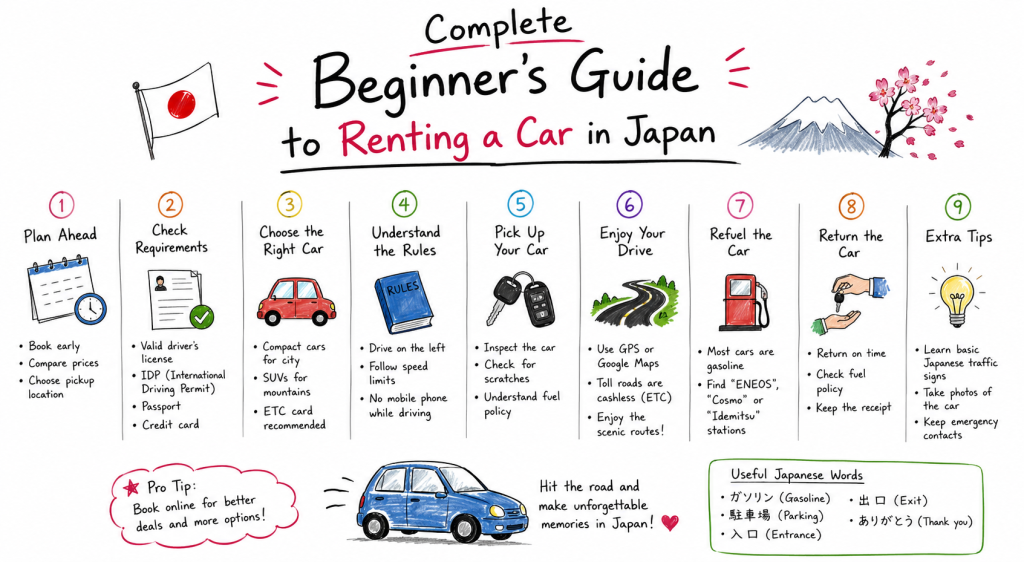
Introduction
Japan is one of the world’s most fascinating travel destinations, offering a perfect mix of modern cities, historic temples, scenic countryside, and breathtaking coastal routes. While Japan’s public transportation system is excellent, renting a car can provide a level of freedom and flexibility that trains and buses simply cannot match.
For first-time visitors, renting a car in Japan may seem intimidating due to different driving rules, language barriers, and documentation requirements. However, with proper preparation and the right rental platform, the process is straightforward and highly rewarding.
This complete beginner’s guide to renting a car in Japan explains everything you need to know before booking a vehicle. Whether you’re a tourist, student, business traveler, family vacationer, or budget-conscious explorer, this guide will help you make informed decisions and enjoy a smooth driving experience across Japan.
Why Renting a Car in Japan Is a Smart Choice
Japan’s rail network is famous worldwide, but it doesn’t always reach every destination conveniently. Many hidden gems, mountain villages, coastal roads, and rural attractions are best explored by car.
Renting a car allows travelers to:
- Travel at their own pace
- Visit remote destinations
- Avoid crowded trains during peak seasons
- Enjoy scenic road trips
- Save time on multi-stop journeys
- Carry luggage comfortably
- Explore rural Japan more efficiently
A rental car is particularly useful when visiting regions such as Hokkaido, Okinawa, Nagano, Kyushu, and the Japanese Alps.
Who Should Rent a Car in Japan?
Tourists
Tourists can enjoy greater flexibility when visiting multiple attractions in a single day without depending on train schedules.
Families
Families traveling with children often find rental cars more convenient and comfortable than public transportation.
Students
International students exploring Japan during holidays can save money by sharing rental costs with friends.
Business Travelers
Business professionals can travel efficiently between meetings in regions where public transport is limited.
Budget Travelers
For group travel, splitting rental costs can sometimes be cheaper than purchasing multiple train tickets.
Benefits of Renting a Car for First-Time Travelers
Freedom to Explore
You are not limited by train routes or bus schedules.
Access to Hidden Destinations
Many scenic locations are difficult to reach using public transportation.
Comfort and Convenience
Travel comfortably with luggage, shopping bags, and personal belongings.
Time Savings
Direct travel often reduces overall journey times.
Flexible Itinerary
You can stop whenever you want for sightseeing, food, photography, or rest breaks.
Better Travel Experience
Japan’s countryside offers beautiful roads, mountain routes, lakes, and coastal drives that are best experienced by car.
Types of Cars You Can Rent in Japan
Choosing the right vehicle depends on your travel plans, budget, and group size.
Economy Cars
Best for:
- Solo travelers
- Couples
- City driving
- Budget-conscious travelers
Advantages:
- Lower rental costs
- Better fuel efficiency
- Easier parking
Compact Cars
Suitable for:
- Small families
- Short road trips
- Urban and suburban travel
Advantages:
- Comfortable seating
- Affordable pricing
- Easy maneuverability
Sedans
Ideal for:
- Business travelers
- Long-distance travel
- Maximum comfort
Advantages:
- Spacious interiors
- Smooth driving experience
SUVs
Best for:
- Mountain regions
- Snowy conditions
- Outdoor adventures
Advantages:
- Higher ground clearance
- Extra luggage space
Minivans
Perfect for:
- Large families
- Group travel
Advantages:
- More seating capacity
- Additional storage
Hybrid and Electric Vehicles
Increasingly popular throughout Japan.
Advantages:
- Lower fuel costs
- Environmentally friendly
- Smooth driving experience
How to Choose the Right Car for Your Trip
Selecting the correct vehicle can improve both comfort and budget management.
Consider Your Group Size
Choose a vehicle that comfortably accommodates all passengers and luggage.
Evaluate Your Route
Mountain roads and rural areas may require larger vehicles or SUVs.
Check Fuel Efficiency
Fuel-efficient vehicles can significantly reduce travel expenses.
Consider Parking Availability
Japan’s urban areas often have limited parking spaces. Compact cars are usually easier to park.
Think About Weather Conditions
Winter travel in northern regions may require vehicles equipped with snow tires.
Documents Usually Needed to Rent a Car
Before arriving in Japan, prepare the required documents.
Passport
Foreign visitors must present a valid passport.
Valid Driving License
You must possess a valid driver’s license from your home country.
International Driving Permit (IDP)
Many travelers need an International Driving Permit based on the Geneva Convention.
Always verify requirements before traveling.
Credit Card
Most rental companies require a credit card for deposits and payments.
Rental Confirmation
Keep a digital or printed copy of your booking confirmation.
Things to Check Before Renting a Car
Before accepting the vehicle, inspect it carefully.
Exterior Condition
Look for:
- Scratches
- Dents
- Paint damage
Ensure all existing damage is documented.
Tire Condition
Check that tires appear safe and properly inflated.
Fuel Policy
Understand whether the vehicle must be returned with a full tank.
Insurance Coverage
Review:
- Collision coverage
- Theft protection
- Third-party liability
Vehicle Features
Test:
- Lights
- Air conditioning
- Navigation system
- Windshield wipers
- Indicators
Emergency Equipment
Confirm the vehicle contains required safety equipment.
Driving Rules Every Beginner Should Know
Japan has specific driving regulations that visitors should understand.
Drive on the Left Side
Vehicles drive on the left side of the road.
Seat Belts Are Mandatory
All passengers must wear seat belts.
Speed Limits
Typical limits include:
- Urban roads: 40–60 km/h
- Rural roads: 50–60 km/h
- Expressways: 80–100 km/h
Always follow posted signs.
No Drinking and Driving
Japan enforces extremely strict laws regarding alcohol and driving.
Mobile Phone Restrictions
Using a mobile phone while driving is prohibited unless hands-free systems are used.
Safety Tips for Driving a Rental Car in Japan
Plan Routes in Advance
Use GPS or navigation systems before starting your journey.
Follow Road Signs Carefully
Many signs include English translations, especially in tourist areas.
Take Regular Breaks
Long drives require adequate rest.
Be Cautious in Rural Areas
Watch for:
- Narrow roads
- Wildlife crossings
- Limited lighting
Monitor Weather Conditions
Heavy rain, snow, and fog can affect driving conditions.
Keep Emergency Numbers Available
Save local emergency contact information before traveling.
Cost of Renting a Car in Japan
Rental prices vary depending on vehicle type, season, and rental duration.
| Vehicle Type | Average Daily Cost | Best For |
|---|---|---|
| Economy Car | ¥4,000–¥8,000 | Solo travelers |
| Compact Car | ¥6,000–¥10,000 | Couples and small families |
| Sedan | ¥8,000–¥15,000 | Business travel |
| SUV | ¥10,000–¥20,000+ | Adventure trips |
| Minivan | ¥12,000–¥25,000+ | Large groups |
| Hybrid Vehicle | ¥8,000–¥18,000 | Eco-conscious travelers |
Additional expenses may include:
- Fuel
- Expressway tolls
- Parking fees
- Insurance upgrades
- Child seat rentals
Booking early often results in lower prices.
Common Mistakes First-Time Travelers Should Avoid
Booking at the Last Minute
Prices are often higher and vehicle availability may be limited.
Ignoring Insurance Options
Unexpected incidents can lead to significant expenses.
Choosing the Wrong Vehicle Size
Too small or too large a vehicle can create unnecessary inconvenience.
Not Understanding Toll Costs
Japan’s expressways can have substantial toll fees.
Forgetting Required Documents
Missing documentation can prevent vehicle pickup.
Not Inspecting the Vehicle
Always record existing damage before departure.
Car Rental vs Public Transport vs Taxi
Choosing the right transportation method depends on your travel style.
| Feature | Rental Car | Public Transport | Taxi |
| Flexibility | Excellent | Moderate | High |
| Cost for Groups | Affordable | Moderate | Expensive |
| Access to Rural Areas | Excellent | Limited | Moderate |
| Comfort | High | Moderate | High |
| Luggage Convenience | Excellent | Limited | Good |
| Long-Distance Travel | Excellent | Good | Expensive |
For travelers planning to explore multiple destinations outside major cities, renting a car is often the most practical solution.
How MotoShare Japan Can Help Travelers
MotoShare Japan aims to make vehicle rentals simple, affordable, and convenient for travelers across the country.
With MotoShare Japan, users can:
- Browse multiple vehicle options
- Compare prices easily
- Choose vehicles based on travel needs
- Enjoy flexible rental durations
- Access reliable customer support
- Find affordable rental solutions
- Book vehicles quickly and securely
Whether you’re planning a weekend getaway, a cross-country road trip, or daily transportation during your stay, MotoShare Japan helps simplify the rental process.
The platform is designed for tourists, students, families, and professionals looking for a hassle-free vehicle rental experience in Japan.
Frequently Asked Questions (FAQs)
Can foreigners rent a car in Japan?
Yes. Most foreign visitors can rent a car if they have a valid driver’s license and the required International Driving Permit.
Is driving in Japan difficult for beginners?
Driving in Japan is generally safe and organized. However, visitors should remember that traffic moves on the left side of the road.
What is the minimum age to rent a car in Japan?
Most rental companies require drivers to be at least 18 years old, though requirements may vary.
Do I need an International Driving Permit?
Many foreign travelers do. Always verify the requirements based on your country of origin.
Is fuel expensive in Japan?
Fuel costs are moderate compared to many developed countries, and hybrid vehicles can help reduce expenses.
Are GPS systems available in rental cars?
Most modern rental vehicles include GPS navigation systems, and many support English language settings.
Should I purchase additional insurance?
Additional insurance can provide peace of mind and reduce financial risk during your trip.
Conclusion
Renting a car in Japan is one of the best ways to experience the country’s incredible diversity, from vibrant cities and historic landmarks to scenic coastlines and peaceful countryside destinations. For first-time visitors, understanding the rental process, required documents, driving regulations, and costs can make the experience much smoother and more enjoyable.
By choosing the right vehicle, preparing the necessary paperwork, and following local driving rules, travelers can enjoy complete freedom and flexibility throughout their journey.
