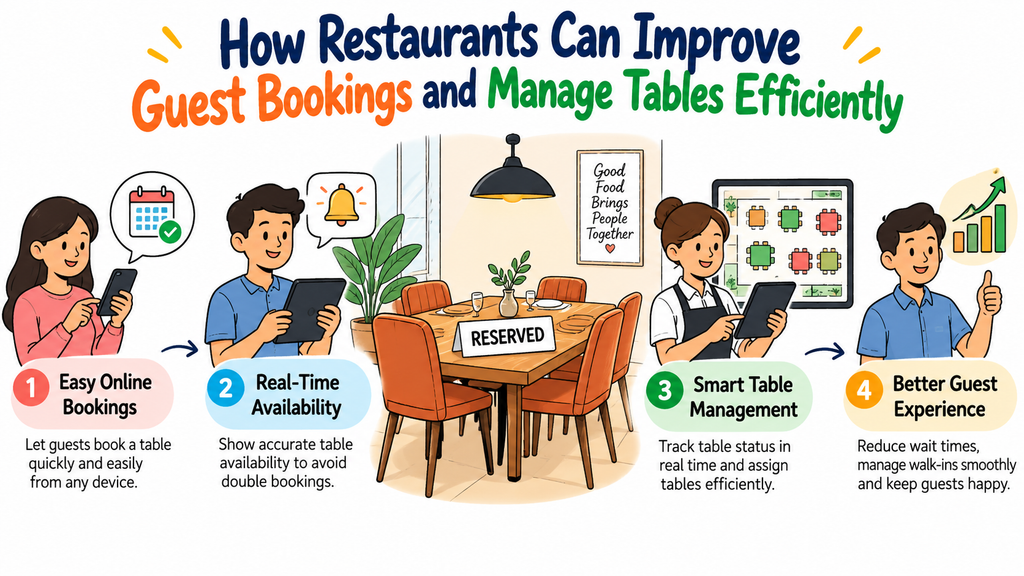
Introduction
Every restaurant wants guests to enjoy their meals without unnecessary delays. However, a good dining experience starts long before the food reaches the table. Guests first need an easy way to book, receive clear information, and find their seats when they arrive.Restaurant teams often manage several tasks at once. They answer booking requests, prepare tables, welcome walk-in customers, and handle changes to existing reservations. Without a clear plan, these tasks can quickly become difficult to manage.A well-organized booking process helps restaurants handle these daily demands. It allows staff to prepare for expected guests, use dining space wisely, and respond to unexpected changes.Restaurant owners can improve their operations without making every process complicated. Clear booking rules, accurate records, staff coordination, and suitable technology can make a real difference. This guide explores practical ways to build a smoother reservation and seating process.
Make Booking Simple for Every Guest
Guests should not struggle to reserve a table. A clear booking process helps customers find the information they need and gives restaurant staff fewer questions to answer.
Restaurants can accept reservations through their websites, telephone calls, or other suitable channels. Regardless of the method, each channel should follow the same basic rules.
For example, guests should know which dates and times offer availability. They should also understand how to request a different time, change their party size, or cancel a reservation.
Restaurant teams can make booking easier by focusing on a few important details:
- Display available reservation times clearly.
- Ask guests for the information needed to manage their bookings.
- Explain any booking limits before guests confirm.
- Send confirmation details after recording a reservation.
- Provide simple instructions for changes and cancellations.
A simple process also helps new employees learn their responsibilities. When everyone follows the same steps, the restaurant can manage bookings more consistently.
Prepare for Guests Before They Arrive
Good preparation reduces pressure during busy service periods. Staff can review the reservation list before opening and identify guests who may need extra attention.
The team should check the expected arrival times, group sizes, and relevant seating requests. This review helps employees prepare suitable tables and organize their work.
Consider a restaurant expecting several family groups and a large birthday party. The host can review the table layout before guests arrive. The team can then decide which tables suit each group and whether any arrangements need extra preparation.
Restaurants should record useful booking details, including:
- Guest name and contact information.
- Date and expected arrival time.
- Number of people in the party.
- Relevant seating preferences.
- Special requests the restaurant can support.
Staff should protect guest information and collect only details that serve a clear purpose.
A short preparation meeting can also help employees understand the day’s reservations. The manager can highlight large groups, busy periods, and possible seating conflicts.
Give Every Table a Clear Purpose
Restaurant tables come in different sizes and serve different needs. A seating plan should help staff assign each table to the right group without wasting valuable space.
For example, a table designed for six people may not suit a group of two during a busy evening. Assigning that table to a smaller party could limit options for larger groups arriving later.
However, restaurants should not focus on table capacity alone. Guests also need comfortable seating, enough room to move, and convenient access to the dining area.
Managers can improve table assignments by considering the following factors:
- The number of guests in each reservation.
- The size and shape of available tables.
- The time between current and upcoming bookings.
- The space needed for staff to serve guests.
- The restaurant’s accessibility and seating requirements.
Flexible table arrangements can help when the layout permits them. Staff may combine suitable tables for larger groups or adjust assignments when reservations change.
Managers should review the plan regularly instead of relying on a fixed arrangement for every service period.
Keep the Dining Area Comfortable and Practical
A full restaurant does not always provide the best dining experience. When staff squeeze too many tables into a small area, guests may feel uncomfortable and employees may struggle to serve them.
A practical floor plan balances seating capacity with movement and comfort. Servers need enough room to carry food, clear dishes, and reach guests safely. Customers also need clear paths to their tables and other facilities.
Restaurant owners should review their layout from the perspective of both guests and employees.
Ask whether customers can reach their seats comfortably. Check whether staff can move between tables without disturbing other diners. Consider whether the layout supports guests with mobility needs.
Different restaurant types may require different arrangements. A casual café may need flexible seating for individuals and small groups. A family restaurant may need room for high chairs and larger parties.
Managers should also consider how the layout works during peak hours. A dining room that feels spacious when half empty may become difficult to navigate when every table has guests.
A thoughtful layout supports smoother service and creates a more comfortable environment.
Use Accurate Table Status Information
Staff need to know which tables they can assign immediately. An empty table may still need cleaning, new settings, or other preparation before the next guests arrive.
Without accurate information, the host may direct guests to a table that cannot support them yet. This can create delays and confusion.
Restaurants can prevent these problems by using clear table statuses. For example, the team may label tables as available, reserved, occupied, or awaiting cleaning.
Each employee should understand what these statuses mean. Staff should update the information as soon as a table changes.
A simple table-status process can help the team:
- Identify tables that are ready for guests.
- Protect reservations from accidental double assignments.
- Alert staff when tables need cleaning.
- Prepare for upcoming bookings.
- Estimate seating availability more accurately.
Restaurants can manage this process with a suitable seating chart or reservation system. The best option depends on the restaurant’s size and daily workload.
The important point is consistency. A system only helps when employees keep its information accurate.
Welcome Walk-In Customers with a Plan
Walk-in customers can provide extra business, especially during busy travel periods or local events. However, restaurants must manage these guests carefully when reserved tables already fill the schedule.
Staff should check current table availability before offering a seat. They should also review upcoming reservations to avoid assigning a table that another guest needs soon.
When no suitable table is ready, employees can provide a realistic waiting estimate. They should explain the next steps and update guests if the situation changes.
A useful walk-in process includes:
- Checking the current seating plan.
- Reviewing upcoming reservations.
- Recording waiting guests in order.
- Sharing realistic waiting estimates.
- Updating guests when availability changes.
Restaurants should avoid making promises before checking the facts. A short wait that turns into a much longer delay can damage guest confidence.
Managers can also review walk-in demand over time. If many customers arrive without reservations on certain days, the restaurant can use that information to plan seating and staffing more effectively.
Handle Booking Changes Without Creating Confusion
Guests sometimes need to change their plans. They may arrive late, reduce their party size, request a different time, or cancel altogether.
Restaurant staff should know how to manage these situations. Clear rules help employees respond consistently and protect other reservations.
For example, a group may call to add two guests shortly before arrival. The host should check table capacity before confirming the change. If the current table cannot accommodate the larger group, staff can explain the available alternatives.
Restaurants should establish policies for late arrivals and reservation changes. These policies should explain how long the team can hold a table and what guests should do when their plans change.
Staff should communicate politely and avoid making commitments they cannot keep. When a delay affects another booking, the team should review the seating plan before offering a solution.
Clear communication helps restaurants manage changes while treating guests fairly.
Reduce Empty Tables Caused by No-Shows
A no-show occurs when a guest misses a reservation without cancelling. These missed visits can leave tables empty during busy periods.
Restaurants can reduce this problem by improving communication before the booking time. A confirmation message gives guests a chance to review their reservation details. A reminder may also encourage them to update the restaurant if their plans change.
Useful practices include:
- Confirming reservations when guests book.
- Sending reminders at appropriate times.
- Making cancellation instructions easy to find.
- Recording no-show patterns.
- Reviewing booking rules for large groups.
Some restaurants may choose to use deposits or cancellation fees for certain bookings. If they do, they should explain the terms clearly before guests complete the reservation.
Managers should also study no-show patterns before changing their policies. For example, frequent missed reservations at a particular time may require better reminders or clearer booking instructions.
The goal is to protect table availability while keeping the booking process fair and easy to understand.
Choose Reservation Software That Fits Your Needs
Manual booking records can work well for a small restaurant with limited reservations. However, handwritten notes and separate lists may become harder to manage as booking volume grows.
Restaurant reservation software can help teams organize booking information in one place. Depending on the platform, it may support online reservations, table assignments, waitlists, booking updates, and guest communication.
Restaurant owners should identify their main challenges before choosing a system. Buying software without understanding the problem can add costs without improving daily operations.
Consider these questions during the selection process:
| What to check | Why it matters |
|---|---|
| Online booking options | Guests may find it easier to reserve a table. |
| Reservation overview | Staff can review bookings in one place. |
| Table management | Employees can plan seating more clearly. |
| Booking changes | The team can update reservations when plans change. |
| Waitlist support | Staff can organize guests waiting for tables. |
| Ease of use | Employees can learn the system more quickly. |
| Pricing and support | Owners can assess the total cost and available help. |
Restaurants should review the actual features of each product before making a decision. Available functions, prices, and service terms can differ between providers.
The right system should support the restaurant’s existing workflow and help employees work more efficiently.
Improve Communication Between Restaurant Teams
Reservation management involves more than the host stand. Servers, managers, kitchen staff, and other employees may all need information about upcoming guests.
Poor communication can create avoidable problems. A server may not know about a large party, or the host may assign a table before the team finishes preparing it.
Restaurants can reduce these issues by defining clear responsibilities. Staff should know who records reservations, who updates table statuses, and who handles special requests.
A short briefing before service can help everyone prepare. The manager can review expected busy periods, large bookings, relevant guest requests, and possible seating challenges.
During service, employees should share important updates quickly. If a table needs extra preparation, the host should know before assigning it. If a booking changes, the relevant staff should receive the updated information.
Managers should also encourage employees to report problems. Staff who work directly with guests often notice small issues before they become larger concerns.
Strong communication helps the whole team deliver a more organized experience.
Measure Results Instead of Guessing
Restaurant owners need a clear picture of their booking performance. Simple measures can reveal where delays occur and which parts of the process need attention.
Useful measures include reservation volume, no-show rates, waiting times, table turnover, and guest feedback.
Managers should review these results across different days and service periods. A restaurant may handle weekday lunches well but struggle with weekend dinners. Looking at separate periods can help reveal the reason.
For example, long waits may result from slow table preparation, poor table assignments, or reservations scheduled too close together. Managers should identify the cause before changing the process.
Staff can also ask guests for feedback about booking and seating. Short, relevant feedback questions may reveal problems that internal records cannot show.
Restaurants do not need to track every possible measure. They should focus on the information that helps them make better decisions.
Regular reviews can help managers test changes and see whether those changes improve the guest experience.
Explore DineGlobe for Restaurant Booking Management
Restaurant owners looking for ways to organize reservations can explore different booking management platforms. The right choice should fit the restaurant’s size, budget, service style, and daily requirements.
DineGlobe focuses on restaurant reservation and booking management. Restaurant teams can visit its website to learn more about the platform and review its available services.
Explore DineGlobe to see whether it suits your restaurant’s needs.
Before selecting any platform, owners should review its current features, pricing, setup requirements, and support options. They should also consider how easily employees can use it during busy service periods.
A suitable booking solution should help the team organize reservations and improve visibility into table availability. Restaurant owners should choose based on their actual requirements rather than features they may never use.
Common Problems That Can Weaken Reservation Management
Even restaurants with a booking process can face problems when staff overlook basic details.
Overbooking the Dining Room
Accepting more reservations than the restaurant can handle may increase pressure on employees and create long waits. Managers should consider table capacity, dining times, and staff availability before accepting bookings.
Forgetting Guest Requests
A missed seating request can create disappointment when guests arrive. Staff should review relevant notes before each service period and explain any limits in advance.
Sharing Unclear Waiting Times
Guests need honest information when the restaurant runs behind schedule. Staff should check table availability before giving an estimate and provide updates when conditions change.
Keeping Outdated Records
Old booking details can lead to duplicate reservations or incorrect table assignments. Employees should update changes promptly and check records before seating guests.
Following Different Booking Rules
Different procedures across phone, online, and in-person bookings can confuse employees and customers. A consistent process helps everyone understand the restaurant’s expectations.
Ignoring Feedback
Guest complaints can reveal weaknesses in the booking process. Managers should review recurring concerns and make practical changes where needed.
Frequently Asked Questions
1. What is restaurant reservation management?
Restaurant reservation management involves recording bookings, organizing table assignments, and preparing for guest arrivals. It helps staff plan seating and respond to changes.
2. How can restaurants make reservations easier?
Restaurants can provide clear booking options, display available times, collect essential details, and send confirmations. Simple instructions also help guests change or cancel their reservations.
3. Why does table planning matter?
Table planning helps restaurants match guests with suitable seating. It also helps staff use dining space wisely and reduce conflicts between bookings.
4. How can restaurants manage walk-in customers?
Staff should check available tables and review upcoming reservations before seating walk-in guests. When tables are unavailable, employees should provide realistic waiting estimates.
5. What causes restaurant reservation problems?
Common causes include incorrect booking details, unclear policies, outdated table statuses, poor communication, and unrealistic seating estimates. A consistent process can help reduce these issues.
6. Can reservation reminders reduce no-shows?
Reminders can help guests review their booking details and inform the restaurant about changes. Their effectiveness may depend on the reminder method, timing, and customer behavior.
7. Should small restaurants use booking software?
Small restaurants may benefit from software when manual records become difficult to manage. Owners should compare available features, ease of use, and costs before choosing a system.
8. How should restaurants handle late arrivals?
Restaurants should create a clear late-arrival policy and explain it to guests. Staff should check the seating plan and communicate any changes politely.
9. Which measures help improve reservation management?
Restaurants can review reservation volume, no-show rates, waiting times, table turnover, and guest feedback. These measures help managers identify problems and assess improvements.
10. What should restaurants consider before choosing DineGlobe?
Restaurant owners should review DineGlobe’s available services, current pricing, setup requirements, and support options. They should decide whether the platform fits their restaurant’s booking and table management needs.
Final Thoughts
A well-managed reservation process helps restaurants prepare for guests and handle daily changes with greater confidence. Clear booking details, thoughtful seating plans, and reliable communication can prevent many common problems.Restaurant owners can begin by reviewing how their teams record bookings and assign tables. They can then improve staff communication, introduce suitable technology, and track results over time.Every restaurant has different needs, so one process will not suit every business. The best approach combines practical rules with tools that support the team’s work.With regular reviews and steady improvements, restaurants can organize their reservations more effectively, make better use of their dining space, and create a smoother experience for guests.
