Introduction
Exploring Japan is a dream for many students. Whether you are living in a bustling metropolis like Tokyo or studying in the scenic regions of Hokkaido or Kyushu, having your own vehicle can transform your experience from a simple commute into a series of unforgettable adventures. While Japan is famous for its efficient rail network, a monthly vehicle rental provides the freedom, flexibility, and privacy that public transport simply cannot match.
In this guide, we will walk you through everything you need to know about securing a long-term vehicle rental in Japan, ensuring you spend less time worrying about logistics and more time soaking in the culture.
Why Renting a Vehicle in Japan Is a Smart Choice
For students, balancing a budget with the desire to explore is a constant challenge. Public transportation is excellent for daily university commutes, but when it comes to weekend trips to Mt. Fuji, hot spring hopping in the Japanese Alps, or discovering hidden gems in rural prefectures, a rental vehicle becomes your best companion.
- Ultimate Flexibility: Stop whenever you want, take the scenic route, and avoid sticking to rigid train schedules.
- Cost-Effectiveness for Groups: If you are traveling with a group of friends, splitting the cost of a rental car is often cheaper than buying individual Shinkansen or regional train tickets.
- Access to Remote Areas: Many of Japan’s most beautiful rural spots, ancient shrines, and nature trails are not easily accessible by train. A rental vehicle opens up the entire country.
Who Should Rent a Vehicle in Japan?
While renting a vehicle is a fantastic option, it is best suited for:
- International students looking to explore beyond their study city on weekends.
- Exchange students planning long-term road trips during university breaks.
- Students living in regional areas where public transport may be less frequent.
- Budget-conscious explorers traveling in groups who can maximize the value of a shared vehicle.
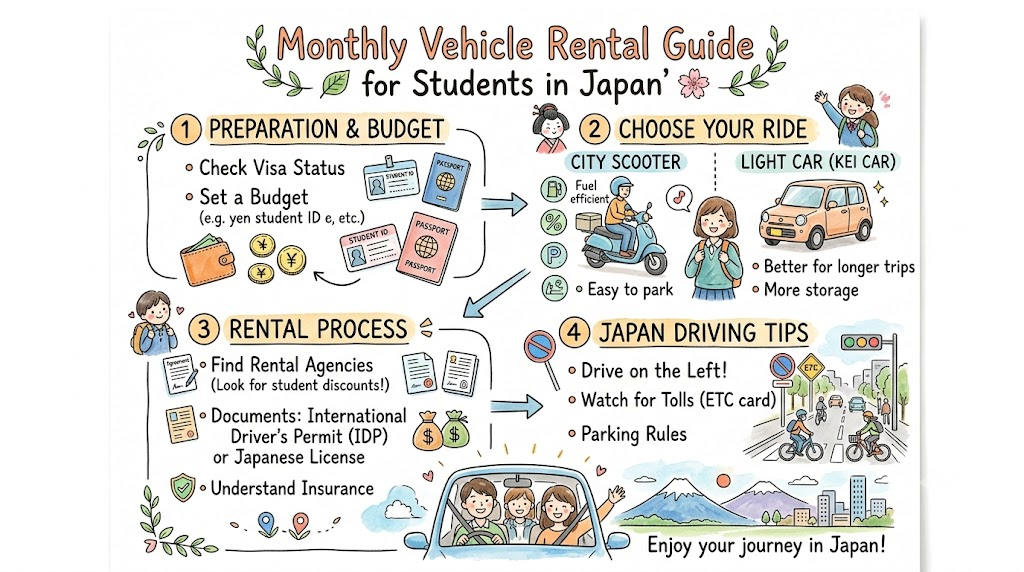
Types of Vehicles You Can Rent
In Japan, rental companies offer a variety of classes to suit your specific needs:
- Kei (Mini) Cars: Perfect for narrow city streets and small parking spaces. They are the most affordable and fuel-efficient option.
- Compact Cars: Ideal for city driving and short weekend trips. They offer a good balance between comfort and maneuverability.
- Sedans: Best for longer highway drives if you prioritize comfort and trunk space for luggage.
- Minivans and SUVs: Highly recommended if you are traveling with a large group of friends or carrying sports equipment for outdoor activities.
Legal Requirements and Documentation
Before you head to a rental agency, ensure you have the following documents ready. Japan has strict traffic laws, and you must be fully prepared:
- Valid Driving License: You must have a driver’s license from your home country.
- International Driving Permit (IDP): Most visitors need an IDP issued under the 1949 Geneva Convention. You must obtain this in your home country before arriving in Japan.
- Official Translation: If your home country issues licenses that are not covered by the IDP (e.g., Germany, France, Switzerland, Taiwan), you must carry an official Japanese translation issued by the Japan Automobile Federation (JAF).
- Passport: Always carry your original passport for identification.
- Age Requirements: While the legal driving age is 18, some rental agencies may require drivers to be 20 or 25 years old to rent certain vehicle classes.
Practical Tips for Your Rental Journey
Checking Vehicle Condition
Always walk around the vehicle with the rental agent before driving off. Document any existing scratches, dents, or windshield cracks. Take photos or videos to ensure you are not held liable for pre-existing damage.
Understanding the Fuel Policy
Most rental companies in Japan expect you to return the vehicle with a full tank of gas. Check if there is a gas station near your drop-off point to avoid “refueling penalties” charged by the agency.
Navigation and Tolls
Most rental vehicles come with built-in GPS that supports English. For highway travel, consider asking for an ETC (Electronic Toll Collection) card. It allows you to breeze through toll gates without stopping, and you can settle the accumulated toll fees when you return the vehicle.
Vehicle Rental vs. Public Transport: A Quick Comparison
| Feature | Rental Vehicle | Public Transport (Train/Bus) |
| Cost | Budget-friendly for groups | Can be expensive for long distances |
| Convenience | Door-to-door access | Limited to station locations |
| Flexibility | High (your own schedule) | Low (fixed timetables) |
| Comfort | Private space | Can be crowded during rush hours |
| Experience | Scenic road trips | Efficient but impersonal |
| Best Use Case | Exploring rural areas/groups | Daily city commutes |
How MotoShare Japan Can Help Travelers
At MotoShare Japan, we understand the unique needs of students and budget travelers. We provide a seamless experience to help you hit the road with confidence.
- Transparent Pricing: No hidden fees or surprise charges. Know exactly what you are paying for upfront.
- Easy Booking: Our user-friendly online platform allows you to reserve your vehicle in just a few clicks.
- Flexible Options: Whether you need a car for a weekend or a full month, we have plans that cater to your schedule.
- Verified Quality: All our vehicles undergo regular safety checks to ensure your journey is smooth and secure.
Frequently Asked Questions
- Can students rent a car in Japan? Yes, provided you meet the age requirements and hold a valid license and IDP.
- Is an international driving permit required? Yes, for most foreign travelers, an IDP is mandatory to drive legally.
- How much does a monthly rental cost? Pricing varies by vehicle class, but monthly rates for Kei cars start at approximately ¥55,000.
- Are helmets provided for bikes? While bike rentals for cars do not apply, if you rent a motorized scooter, helmets are usually included.
- What happens if the vehicle breaks down? Most rental agencies provide 24/7 roadside assistance. Always keep the emergency contact number saved.
- Can I return the car at a different city? Yes, “one-way” rentals are possible but often incur an additional drop-off fee.
- Do I need a credit card? Yes, most companies require a credit card for the security deposit.
- Is insurance included? Basic collision insurance is usually included, but it is highly recommended to opt for full coverage.
- Are toll roads expensive? They can be, which is why using an ETC card is highly recommended to manage costs efficiently.
- Is it difficult to drive on the left side of the road? It takes a few hours to adjust, but road signage in Japan is excellent and very clear for foreigners.
Conclusion
Renting a vehicle for a month in Japan is a life-changing way to see the country. It gives you the freedom to explore at your own pace and create memories that go far beyond the typical tourist path. From the coastal roads of Okinawa to the mountains of Tohoku, your adventure starts with the right vehicle.
Ready to start your Japanese adventure? Book your vehicle today at motoshare.jp and enjoy the freedom of the open road.
