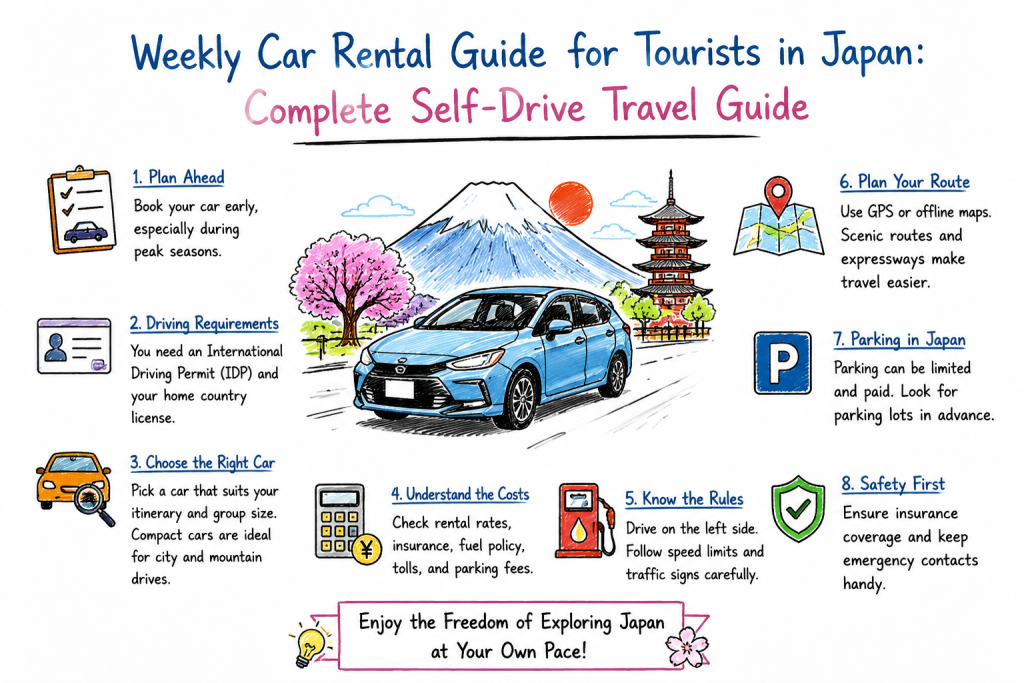
Introduction
Japan is one of the most organized, safe, and scenic travel destinations in the world. From modern cities like Tokyo and Osaka to peaceful countryside routes in Hokkaido and Kyushu, the country offers a perfect mix of culture, technology, and natural beauty.
For tourists who want complete freedom while traveling, a weekly car rental in Japan is one of the best options. Instead of depending only on trains or buses, renting a car allows you to explore hidden locations, rural towns, coastal roads, and mountain routes at your own pace.
A weekly rental is especially ideal for travelers who plan to stay for 5–10 days and want flexibility without daily rental hassles.
This guide explains everything you need to know about self-drive car rental in Japan, including documents, costs, safety tips, and travel planning insights.
Why Renting a Car in Japan Is a Smart Choice
Japan has one of the world’s best public transportation systems, but it doesn’t always cover remote destinations efficiently. A weekly rental car becomes a powerful travel solution.
Key reasons to rent a car in Japan:
- Freedom to travel beyond train routes
- Comfortable long-distance travel
- Access to countryside and hidden gems
- Flexible schedule without train timing restrictions
- Ideal for families and group travelers
For example, while trains connect Tokyo and Kyoto efficiently, places like Mount Fuji viewpoints, rural Nagano villages, or coastal Shikoku roads are far more enjoyable by car.
Who Should Rent a Car in Japan?
Weekly car rental is suitable for:
- First-time tourists exploring multiple cities
- Students on short-term study trips
- Working professionals on business travel
- Families visiting Japan for vacation
- Backpackers who want flexible travel routes
- Road trip enthusiasts exploring scenic Japan
Even travelers from India who are used to crowded metro cities like Delhi, Mumbai, or Bangalore find self-drive travel in Japan extremely smooth and stress-free.
Benefits of Renting a Car for First-Time Travelers
A first-time bike rental or car rental experience in a foreign country can feel challenging, but Japan makes it simple.
Benefits include:
- Clean and well-maintained vehicles
- Clear road signage in English and Japanese
- Strict traffic discipline and safety
- Smooth highways and scenic routes
- Easy navigation using GPS systems
Compared to chaotic traffic conditions in cities like Chennai, Kolkata, or Hyderabad, Japan offers a far more structured driving experience.
Types of Cars You Can Rent in Japan
Hatchbacks and Compact Cars
Best for solo travelers and couples. Easy to park in cities like Tokyo.
Sedans
Comfortable for families traveling between cities like Osaka, Kyoto, and Nagoya.
SUVs
Ideal for mountain routes and snowy regions like Hokkaido.
Luxury Cars
Used for premium travel experiences and business trips.
Electric Vehicles
Eco-friendly option for urban travel.
Minivans
Best for large groups and families.
How to Choose the Right Car for Your Trip
Choosing the right rental vehicle depends on your travel style.
Consider these factors:
- Number of passengers
- Distance of travel
- Luggage capacity
- City vs countryside driving
- Budget range
- Fuel efficiency
For example, if you plan a Tokyo–Mt. Fuji–Hakone route, an SUV is more comfortable. For city travel in Osaka or Kyoto, a compact car is ideal.
Documents Usually Needed to Rent a Car in Japan
Before booking, ensure you have:
Valid Driving License
International Driving Permit (IDP) is usually required.
Government ID Proof
Passport is mandatory for tourists.
Address Proof (if applicable)
Sometimes required for verification.
Security Deposit
Refundable deposit depending on car type.
Always check rental policies before confirming your booking.
Things to Check Before Renting a Car
Before starting your journey, inspect:
- Vehicle condition (scratches, tires, brakes)
- Fuel policy (full-to-full is common)
- Insurance coverage
- Mileage limitations
- Availability of GPS system
- Helmet availability (if combining bike rentals)
- Rental agreement terms
This ensures a smooth and stress-free travel experience.
Safety Tips for Driving in Japan
Japan is one of the safest countries for driving, but basic precautions are important:
- Always follow traffic rules strictly
- Drive on the left side of the road
- Wear seat belts at all times
- Avoid mobile phone usage while driving
- Respect speed limits
- Keep emergency numbers saved
- Check weather before mountain travel
Compared to crowded Indian roads in Delhi or Mumbai, Japan offers disciplined traffic behavior, but strict enforcement makes compliance essential.
Cost of Car Rental in Japan
Weekly rental costs vary depending on vehicle type:
Economy Cars
Approx. ¥25,000 – ¥45,000 per week
Sedans
Approx. ¥40,000 – ¥70,000 per week
SUVs
Approx. ¥60,000 – ¥100,000 per week
Luxury Cars
Approx. ¥100,000+ per week
Additional costs may include insurance, tolls, and fuel.
Common Mistakes First-Time Travelers Should Avoid
- Not checking license validity before travel
- Ignoring insurance coverage details
- Overpacking luggage in small cars
- Not understanding toll road charges
- Skipping vehicle inspection before pickup
- Driving without GPS assistance
Avoiding these mistakes ensures a smoother travel experience.
Bike Rental vs Public Transport vs Taxi
| Factor | Car Rental | Public Transport | Taxi |
|---|---|---|---|
| Cost | Moderate for groups | Low | High |
| Convenience | High | Medium | High |
| Flexibility | Very High | Low | Medium |
| Comfort | High | Medium | High |
| Travel Experience | Best for exploration | Structured | Limited |
| Best Use Case | Road trips & group travel | City commuting | Short distances |
While Japan’s trains are excellent, self-drive travel offers unmatched flexibility for tourists.
How MotoShare Can Help Travelers
MotoShare India provides a seamless rental experience for travelers who want flexibility, affordability, and convenience.
Even though MotoShare operates with a strong focus on India-based mobility solutions, its travel-first approach aligns with global self-drive needs, including international markets like Japan.
Key benefits include:
Easy Online Booking
Quick and simple reservation process.
Wide Range of Vehicles
From scooters to premium cars.
Transparent Pricing
No hidden charges or unexpected fees.
Verified Vehicle Owners
Ensuring safe and reliable rentals.
Flexible Rental Options
Hourly, daily, and weekly plans.
Availability Across Cities
Strong presence in major Indian cities like Delhi, Mumbai, Bangalore, Goa, Jaipur, Pune, Hyderabad, Chennai, and Kolkata.
FAQs
1. Can tourists rent a car in Japan?
Yes, tourists can rent cars with a valid passport and International Driving Permit.
2. Is an international driving permit required?
Yes, most rental companies require an IDP along with your home country license.
3. How much does car rental cost in Japan?
It typically ranges from ¥25,000 to ¥100,000 per week depending on the car type.
4. Are insurance options included?
Basic insurance is usually included, but additional coverage is recommended.
5. Can I rent a car without a deposit?
Most providers require a refundable deposit.
6. What happens if the car breaks down?
Rental companies provide roadside assistance support.
7. Can I take the car between cities?
Yes, intercity travel is allowed but check mileage and toll policies.
8. Is driving in Japan difficult for first-timers?
No, roads are well-marked and traffic rules are strictly followed.
9. Do rental cars include GPS?
Yes, most vehicles come with built-in navigation systems.
10. Is fuel included in rental price?
No, fuel is usually paid by the renter.
Conclusion
Weekly car rental in Japan is one of the most convenient ways to explore the country beyond traditional travel routes. It offers freedom, comfort, and access to scenic destinations that trains cannot reach.
Whether you are planning a short vacation, a business trip, or a long scenic road journey, self-drive travel gives you full control over your itinerary.
For travelers looking for flexible mobility solutions and seamless booking experiences, platforms like MotoShare Japan and MotoShare India make travel easier, more affordable, and highly convenient.
